
Are we witnessing the end of the first generation of influencers? It’s entirely possible, judging by the growing fatigue that influencer culture now seems to inspire.
The phenomenon has changed dramatically over the past decade.
In contrast to distant, highly formatted institutional media, there was something genuinely revolutionary about those ordinary people who, ten years ago, embraced the digital Wild West. They were more spontaneous, more sincere, and closer to their audiences than traditional media outlets. They weren’t even called influencers yet – they were simply vloggers documenting their daily lives, embodying exactly what they were: ordinary individuals sharing their own reality.
Then capitalism did what capitalism always does.
I wrote about this exactly six years ago: as Instagram and later TikTok exploded, brands quickly realized the opportunity before them. Here were instant, global advertising spaces – essentially free, if they played their cards right. And so brands began to exploit one of humanity’s oldest vulnerabilities: ego.
If some people wanted to present the best version of themselves (Instagram has never been about comedy – it has always been about beauty), if they wanted to stage their lives as dream lives – or, more accurately, luxurious lives – then brands would happily turn those people into walking billboards. Or rather, into “brand ambassadors”. All it took was a few free products.
Just like that, advertising shifted from expensive media buys in newspapers and television to virtually free promotion.
And just like that, we moved from the age of the vlog to the rather toxic age of influence.
Authentic recommendations gradually became sponsored partnerships, then double advertising campaigns – promoting both the influencer and the product – without ever fully acknowledging what they had become.
The people most committed to putting themselves on display became products.
The people most committed to putting themselves on display became brands.
The people most committed to putting themselves on display became products for their own brands while simultaneously promoting the products of other brands. Yes, it’s as dizzying to write as it is to read.
For years, influencer culture has continued to surf on the illusion of the authenticity that defined its early days – even as that authenticity slowly eroded under the financial pressures of the industry itself.
Eventually, this created serious ethical contradictions.
How do you reconcile authenticity with constant performance?
How do you become a spokesperson without becoming a clothes hanger for numerous brands?
How do you remain authentic while making a living from carefully curating your authenticity?
You can’t.
And because it’s impossible, the narrative never evolved. It became corrupted.
Authenticity and relatability remain the influencer economy’s favorite buzzwords, but neither has much to do with reality anymore. Both are carefully constructed for the camera – and anything constructed for the camera is, by definition, a performance.
At this point, however, it is important to distinguish between two very different groups.
The first consists of pseudo-influencers who sell a life they do not actually live. Hourly rentals of private jet cabins built inside airport hangars create the illusion of flying by private jet. Counterfeit Hermès bags are everywhere. Carefully staged images of picture-perfect children have, in some cases, concealed severe abuse behind closed doors. These are not hypothetical examples – they are all very real.
The gap between the authenticity these pseudo-influencers claim and the reality of their manufactured personas has become too glaring to ignore. The most blatant narcissism is becoming increasingly difficult to disguise behind the convenient rhetoric of “sharing” and “being authentic”.
The second group consists of influencers who have successfully become public figures but continue to trade on the intimacy they built in their early years. Increasingly, they are criticized for being disconnected from the realities of ordinary life while continuing to cultivate the illusion of closeness with their audiences. Their lives bear little resemblance to those of the people who follow them – many of whom are struggling simply to make ends meet in an increasingly difficult economy.
The gap between the image of relatability they continue to project and the financial and social reality they inhabit has simply become too obvious to ignore.
Authenticity has become an industry of its own.
It took audiences a surprisingly long time to recognize the trick.
Ironically, artificial intelligence may have accelerated that realization. Over the past year, social media has been flooded with AI-generated content claiming to be real when it isn’t. As a result, many users have begun rejecting AI content and influencer content in much the same way, searching instead for something that feels genuinely authentic.
Today, trust has become fragile.
Every beautifully staged moment invites suspicion. Is this someone’s real life or is it another undisclosed sponsorship?
The uncertainty never stops.
And eventually, exhaustion sets in.
Much of the content produced by the influencer economy is strikingly hollow, largely because it rarely showcases any genuine talent. Meanwhile, an increasingly mature audience is growing less interested in appearances and increasingly hungry for substance.
The same gestures. The same formats. Morning routines. Outfit of the day. Bucket lists. Self-development. Travel diaries. Summer body transformations.
Again. And again. And again.
What once felt innovative has become an instantly recognizable visual language. Like every revolution before it, the vlog revolution has institutionalized itself.
And once institutionalized, it has become predictable, boring and, in many ways, toxic.
The truth is that the audience has changed because it has grown up.
Ten years ago, many followers were twenty years old and still searching for themselves. Today they are thirty and they have opinions.
In an uncertain, often frightening world, more and more of us are looking for moments of beauty and transcendence that haven’t been manufactured. In a world that feels increasingly on fire – in every sense of the phrase- we are looking for knowledge, understanding and meaning. And in a time when political discourse and public institutions have lost so much credibility, people are increasingly unwilling to tolerate yet another layer of performance, manipulation and incoherent storytelling on social media.
As for younger generations consuming this content, they are under no illusion. They know perfectly well that much of what they are watching is staged and manufactured. Beyond consuming it with a certain sense of irony, they no longer engage with it in any meaningful way.
The only currency that truly mattered in the influencer economy – audience engagement – is rapidly eroding, forcing brands to reposition themselves in a digital landscape undergoing profound transformation.
This is not the end of influencers.
It is the end of the first generation of influencers – the generation whose greatest asset was the illusion of authenticity and intimacy.
My bet is that the second generation will understand something fundamentally different: their value will no longer lie in giving audiences access to their private lives, it will lie in their ability to enrich everyone else’s.
At least, I hope so.
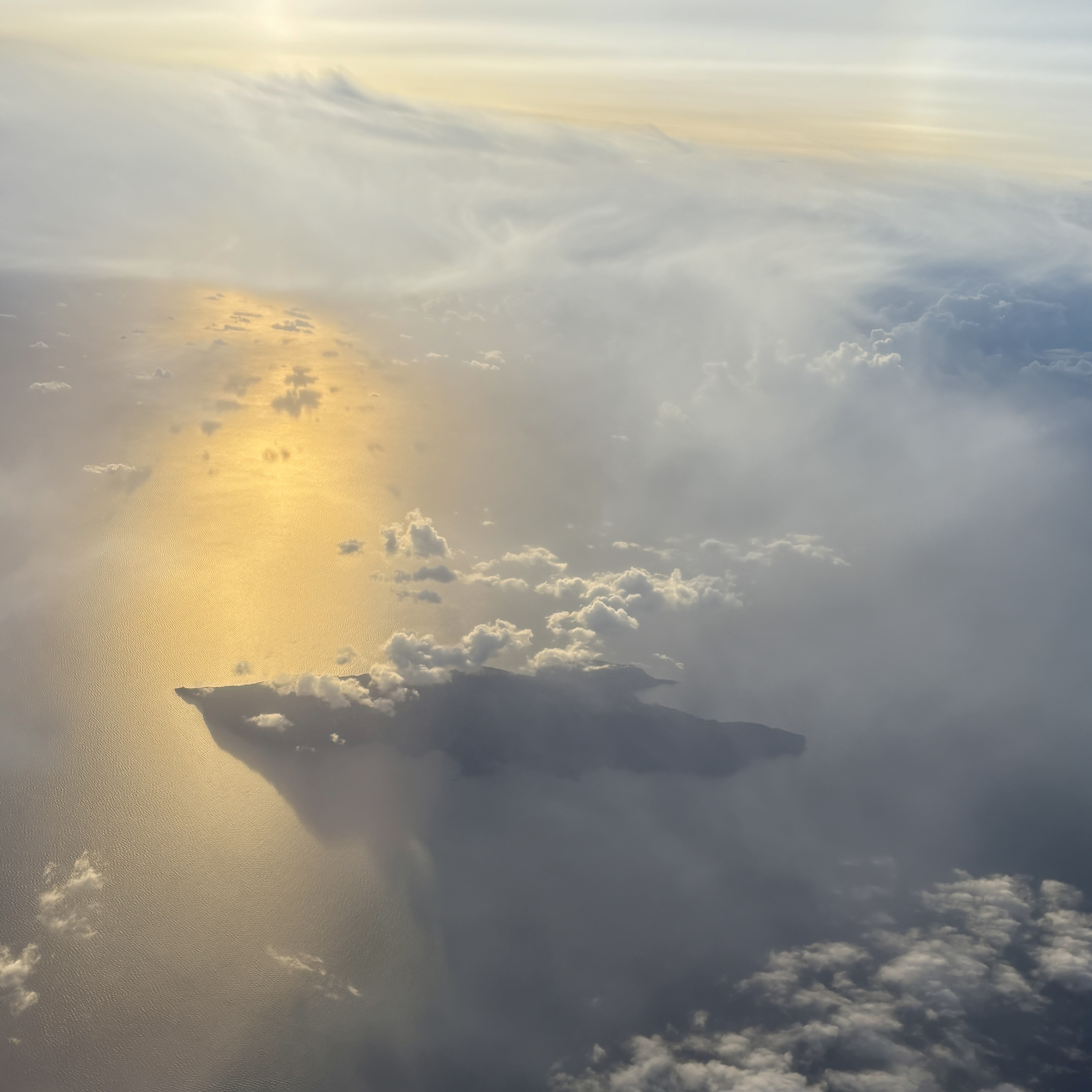
Editor’s note: I’m sharing here part of my collection of skies (yes, I collect skies, whether seen from above, on a plane, or from below, with my feet firmly on the ground). We all need air and open horizons. Here, among others, are Capraia Isola, Gorgona Scalo, Isola di Montecristo and the Alps.


September 4, 2026
