
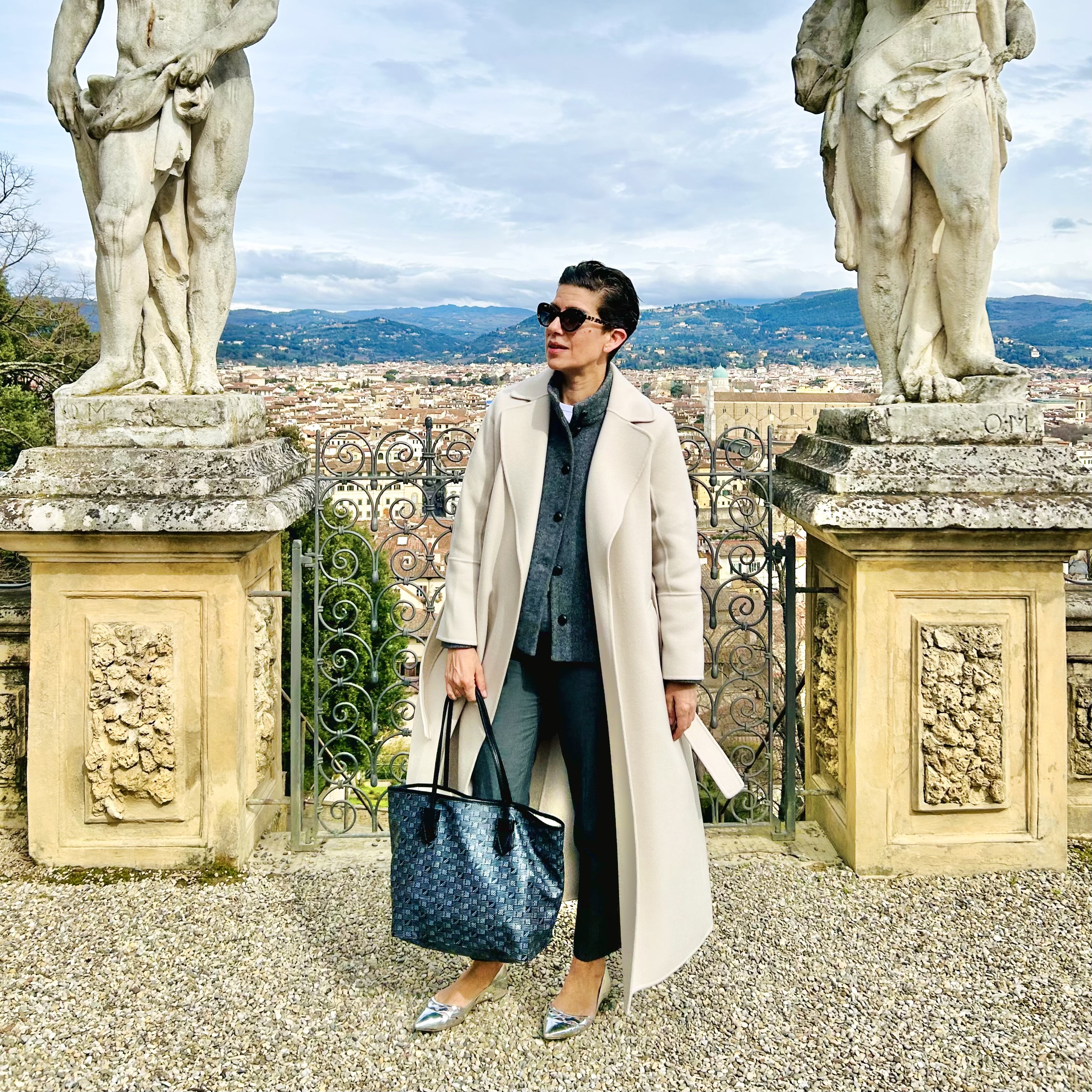
Florence is an open-air museum, and for good reason: the Renaissance was born there. The artistic patronage that the Medici exercised there for many decades allowed artists such as Brunelleschi, Botticelli, Michelangelo, Lippi or da Vinci to display their art within the city itself but also throughout Europe.
In fact, the city of Florence can quickly overwhelm the foreign tourist.
The city is full of architectural and pictorial wonders and it is not for nothing that it was part of what was once called the “Grand Tour”.
It is Richard Lassels who, in his “Voyage of Italy” published in 1670, coined this expression for the first time. The term becomes so popular that another expression is invented on its model, the “Petit Tour” to designate a shortened version in which several cities are omitted. In both cases, the highlight of the itinerary is Italy, seen as an open-air museum where the exorbitant quantity of works of art and the mild, sunny climate are powerful attractions.
This educational journey, which can last several years, is intended to complete the education of wealthy young people after their studies, which are then essentially based on Greek and Latin humanities.
The Grand Tour is practiced by the British, German, French, Dutch, Polish, Scandinavian and later Russian aristocracy from the 1760s, and finally American from the second half of the 18th century.
The Grand Tour, which allows young members of the aristocracy to become “complete gentlemen” (or “complete gentlewomen”, if I believe E.M. Forster in “A Room with a View” and Henry James in “Portrait of a Lady”) and to perfect their education, also allows them to form friendly ties with individuals of the same social rank, promised the same type of diplomatic, military, political or commercial future in other countries.
In the 18th and 19th centuries, the Grand Tour is still completed by the European and American upper classes but the trip is also made by art lovers, collectors and writers, including Goethe and Alexandre Dumas.
The itinerary of the Grand Tour is not set in stone, but is subject to innumerable variations, depending on an individual’s interests and finances. Generally speaking, the Grand Tour consists of stays in France, Switzerland and Italy – Paris, Lyon, Geneva, Lausanne, Turin, Naples, Venice, Rome and of course Florence, which at the time benefits from a large Anglo-Italian community delighted to welcome quality travelers. The Tribuna of the Uffizi Gallery, the first museum ever created to bring together the masterpieces of Italian painting and sculpture, is an essential stop.

On their return, the journey has a social function: it constitutes an element of recognition and social advancement, it corroborates the financial means and culture of the traveler. The purpose of the journey is not so much to go and see other cultures or to forge one’s own culture, but rather to go and see what must be seen, to forge a common culture and to forge social ties around this common culture. The important thing is to be able to evoke anecdotes, memories and common knowledge on their return – which explains why the aristocracy always visits the same places.
During their Grand Tour, the young people buy, according to their means, pieces of art and antiques or have their portrait painted and these souvenirs, displayed in their homes, remind visitors that their hosts have had the privilege of traveling to the sources of the civilized world.
The Grand Tour is today, in a fragmented way, the feature of tourists in search of history and art.


May 1st, 2026
