
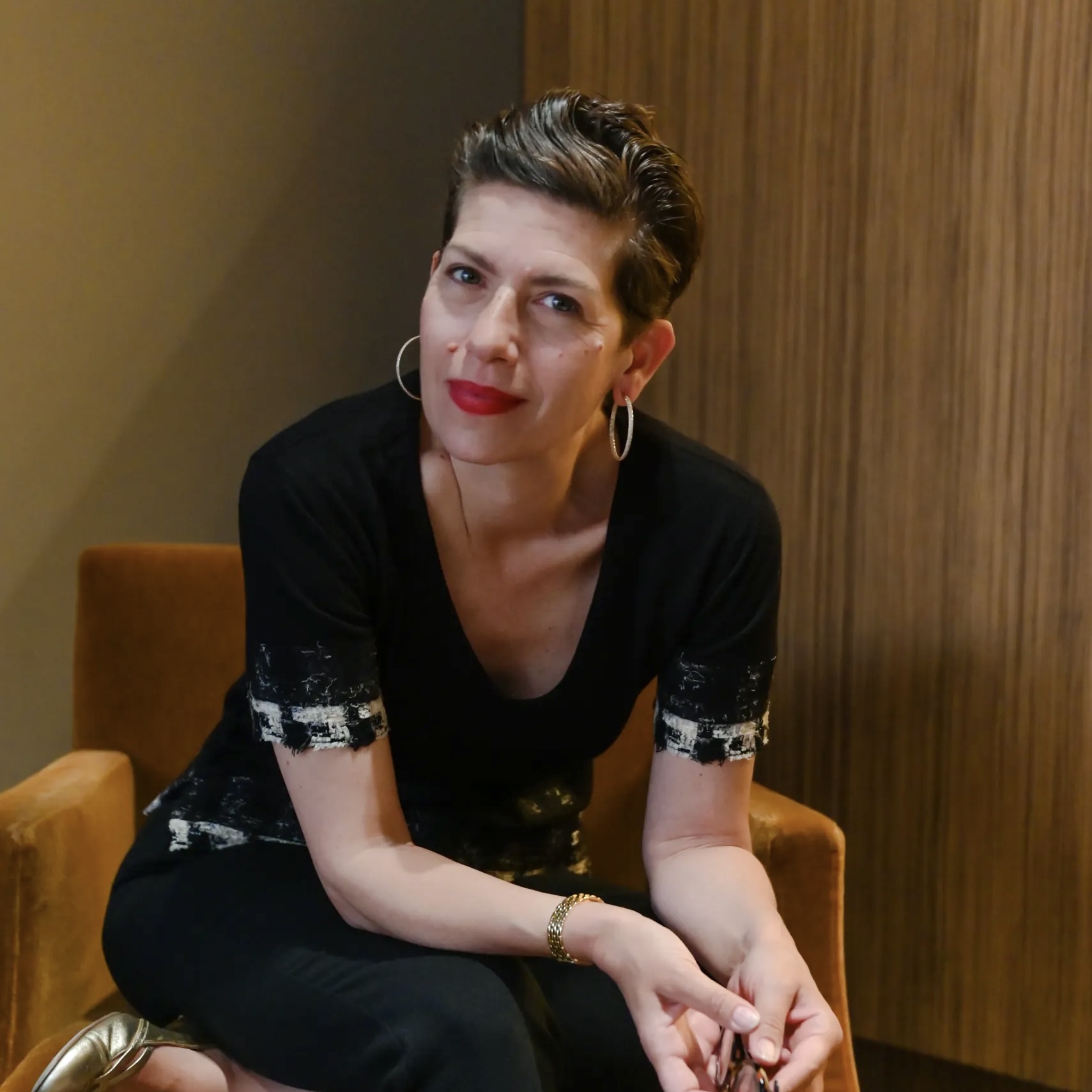
Menopause may be a physiological phenomenon, but it is also a cultural phenomenon, and its social perception greatly influences how women experience it.
Historical and Semantic Perception
In semantic terms, I will paraphrase French writer Camus here when he states that misnaming things contributes to the world’s unhappiness, because I cannot help but note that the word itself carries a negative social charge: menopause is a combination of words (meno, menstruation – and pause – stop) created in 1816 by the French physician Charles de Gardanne in his essay “On Menopause or the Critical Age of Women.”
Charles de Gardanne, who speaks of critical age (thanks, Charles, that was nice, very much appreciated), channels the 18th-century scientists who categorize, rationalize, and classify what they see and who make the female body of lesser quality than the male body.


Thank you Charles: I don’t feel critical – or maybe yes but not in the way you meant
In the 19th century, when the female body is thought of solely in terms of moods, it is assumed that menopause is caused by a weakening of the woman who can no longer menstruate. It is a body of inferior quality than the fertile body – which is the norm for a body already degraded compared to the male body.
The phenomenon of menopause is considered solely from a symptomatologic and pathological perspective. Bloodletting and sexual abstinence are recommended, and menopause can cause mental illness and kleptomaniacal and sexual frenzies.
In fact, the semantic emphasis underlying this physiological phenomenon is negative, problematic, and pejorative, marking a halt, a loss, a deficiency compared to the fertile body, a weakening, and a mourning when it is not linked to mental insanity.
Western Social Perception
Even today, menopause is synonymous with nothing but problems: loss of skin elasticity, loss of libido, vaginal dryness, hot flashes, weight gain – when it is not associated with the risk of osteoporosis and breast cancer.
Moreover, menopause is taboo, which is why I’m going to devote an endless article to it. Don’t forget, a menopausal body is a body of inferior quality than the fertile body – which is the norm for a body already degraded compared to the male body.

Not me thinking about this endless article – what you don’t know is that there is a pornstar martini in front of me, not pictured
Menopause may be discussed in medical magazines or fashion magazines, but certainly not in social life, especially if that social life is urban.
Menopause is perceived negatively by Western societies, and this negativity is directly linked to the way these societies generally view the female body.
Socially, menopause marks the mourning of a period during which women are able to fulfill the functions assigned to them by society – motherhood and sexual objectification.
Socially, a woman is nothing but her body.”
Simone de Beauvoir
I’ve said it before: Western societies only consider and value women through two prisms: their ability to bear children and their ability to satisfy heteronormative sexual desires. Satisfying these sexual desires largely depends on youthfulness, which explains why mature women become invisible in the eyes of a society still largely dominated by men.
Freud based the meaning of a woman’s life on her ability to procreate.
(Thanks for stopping by, Sigmund, much appreciated, really. Go join your friend Charles.)
From this perspective, the life of a menopausal woman no longer has any purpose, and she becomes invisible, destitute and powerless. With all due respect to Sigmund, who probably hasn’t met the solar, intelligent, and very busy postmenopausal women I know, women feel according to numerous surveys more fulfilled and happier around the age of 50.


Déborah. We’ve already talked about Déborah here. This friend and colleague regularly forgets to fill up her car – in fact, one day we ran out of gas next to the Élysée Palace on our way to a hearing. I ended up pushing the car, helped by two kind police officers. Since then, Déborah has switched to an electric car. Beyond the joke, Déborah, whom I’ve known for twenty-five years, is one of the most vibrant, energetic, resilient, honest, and joyful people I know

I understand the argument that the inherent fear of death disqualifies aging people in society’s eyes – but even if the argument remains valid (even if it’s bullshit) generally for all sexes, it must be admitted that it applies harsher to women.

Speaking of death – yes, I still smoke, alas, or not, I’m not sure. Stunt performed by a professional, do not try this at home
Menopause, instead of being a stage like any other in the human life cycle, is only a harbinger of death, the deadline of which is nevertheless being pushed back year after year thanks to the progress of medicine. Our relationship with death should be rethought, but our post-capitalist societies are far too materialistic for this relationship to be serene and peaceful in a near future.
And clearly, the theme of death is compounded – for women – by a theme linked to youthfulness.
Non-Western Social Perceptions
If we study other societies and step away from our Western ethnocentrism for five minutes, how is menopause perceived?
Regarding Costa Rica – which is heavily influenced by North American culture – the article “Menopause in Latin America: Symptoms, Attitudes, Treatments and Future Directions in Costa Rica” by T.D. Locklear and al., published in the journal Maturitas in 2017, focuses on plants with medicinal properties. Like their American counterparts, Costa Rican women experience similar symptoms, including hot flashes and night sweats, as well as a generally negative attitude toward the menopausal transition. But like other Latin American women, Costa Rican women make little use of hormone therapy and instead rely on alternative therapies, including massage, dietary changes, and medicinal plants.
Among the Baruya of New Guinea, the cessation of menstruation brings a change in social status, and women’s authority increases when they no longer menstruate. This status transformation stems directly from the representations associated with menstrual blood, the very idea of which provokes both disgust and fear: this flow is considered a dirty substance. Menstruation represents a threat within the system of male domination because it is said to have lethal power and could destroy men’s strength if they came into contact with it (Cécile Charlap, lecturer in sociology at the University of Toulouse Jean-Jaurès and CNRS researcher, “Menopause, cultures and social relations” in “La Fabrique de la Ménopause,” 2019).
In West Africa, Lobi women who no longer menstruate hold a specific social position that allows them to take on roles forbidden to other women because they are perceived as invulnerable.
Among the Beti in Cameroon, the cessation of menstruation signifies the end of sexual submission, and any wife who no longer menstruates can unquestioningly demand a room or at least a separate bed from her husband.
In Bali, menopause is an occasion for a significant change related to impurity. Fertility is considered more or less impure and prevents women from attending certain ceremonies during which menopausal women and young virgins perform certain rites together, from which women of childbearing age are excluded. When a certain restraint of language and attire is imposed on the female sex, menopausal women can, for their part, make obscene remarks as freely as men.
A widespread belief in traditional shamanic cultures holds that menopausal women gain “wise femininity.” They then become priestesses and healers, that is, the spiritual leaders of their communities.
The understanding of menopause is fundamentally cultural and differs from culture to culture. And this cultural perception changes each woman’s personal perception – as we will see.
Where we go back to semantics
In Asian societies, the relationship with menopause is completely different. First of all, the word doesn’t exist and doesn’t have an equivalent as negative as it does in Western societies. The majority of Asian languages speak of kônenki.
Returning to the semantic dimension of the subject, kô means renewal or regeneration, nen means year, and ki means season or energy. In Asian societies, kônenki evokes a gradual transition that sees a renewal of energy, a regeneration of energies. Some even speak of a second Spring, experienced in a more personal way because it is free from the obligations of raising children.
This change of life is a stage like any other in the human life cycle. Maturity is synonymous with wisdom and authority and is therefore glorified.
From semantic and social perception to personal perception
Surprisingly (or not, indeed), the semantic and cultural perception of this biological stage in the female life cycle conditions the way it is physiologically experienced by women.
Anthropologist Margaret Lock exposed this distinction in her 1996 article “Political Culture and the Experience of Women’s Aging in Japan and America,” published in the journal Sociology and Society. Her comparative research in North America and Japan revealed that the physiological changes associated with menopause and kônenki are very different, as they are the result of the cultural understanding of aging in each society.
Kônenki, which applies equally to men and women, causes little discomfort for most women. The Japanese view of fertility and motherhood differs from the Western view: while the latter sees fertility as bringing a child into the world, the Japanese view extends fertility to the raising of grandchildren. In fact, Japanese grandmothers always feel fertile because they care for their grandchildren.
Hot flashes and night sweats, which affect 75% of Western women, only affect 10% of Japanese women experience hot flashes. The incidence of osteoporosis and heart disease, which are often associated with menopause, is much lower in Japan than in the West, and the incidence of breast cancer is about three times lower than for Western women.
Several factors are responsible for this difference.
Diet may partly explain this disparity. Japanese women currently enjoy the longest life expectancy in the world, with very few chronic health problems such as diabetes, high blood pressure, arthritis, or allergies. Some studies related to menopause and kônenki highlight the high intake of phytoestrogens and isoflavones (found in soy) in the Asian diet as a possible cause of the alleviation of hormonal imbalances in Japanese women.
The good health of Japanese women likely results from a combination of healthy diet, physical exercise, universal public education, equal access to quality healthcare, and a long tradition of prevention. Cultural influence also contributes greatly.
But beyond this general good health, the fact remains that Japanese women suffer few of the negative symptoms associated with what we call menopause. When menopause is socially valued, women experience few physical and psychological discomforts.
This is why it may be necessary to deconstruct certain Western myths (no, menopause is not the same for every woman, no, menopause does not cause mood swings or anxiety, no, menopause does not occur at 50 sharp, no, weight gain is not automatic) so that each woman can fully and calmly embrace this new state, which is completely normal.
We can’t change our society’s view of menopause, but we can at least change our own view of our own menopause.
Editor’s note: It turns out you’ve almost only seen me here as a menopausal woman: I reached menopause at 42, and even though I knew it was an early age for menopause, I simply accepted it as a meaningful stage in my life: I no longer wanted children. A natural and unproblematic state in my eyes, I experienced no discomfort – aside from incendiary hot flashes for two years. I quickly realized that a non-inflammatory diet and regular exercise (which I’ve always needed) would help my body navigate this hormonal shift more smoothly. I’m menopausal, but I never think about it. As I’ve said here before, I feel young, and it has less to do with my body and more to do with my heart.


Vintage trousers – Chanel top – Sergio Rossi flat shoes – Gucci coat and handbag
November 14, 2025
