
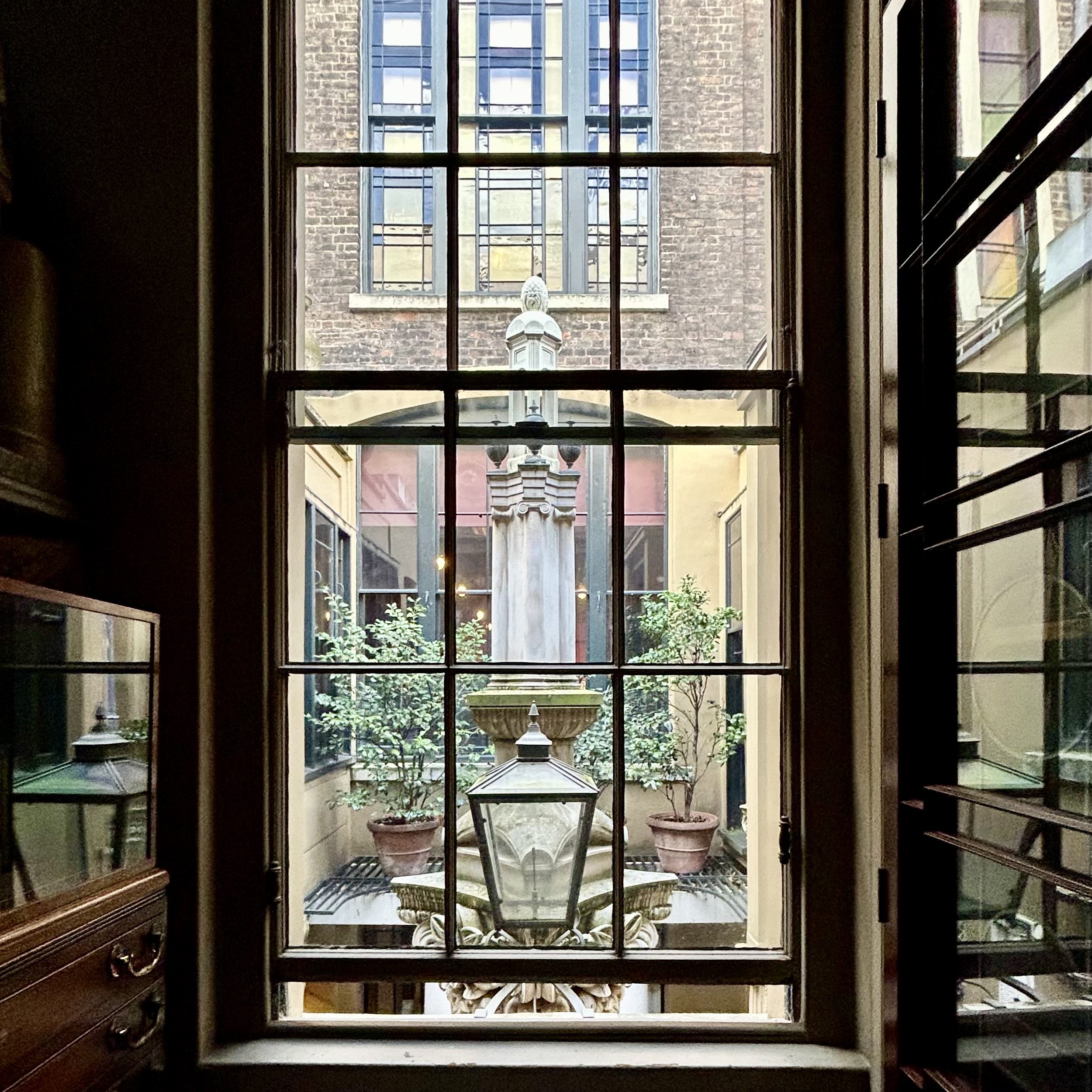
Sir John Soane’s Museum in London is the former home of the neoclassical architect John Soane.
The son of a mason, John Soane is born in 1753 near Reading in Goring-on-Thames. He studies architecture during which he wins silver and gold medals and a scholarship for a study trip to Italy.
Returning to England, he sets up his architectural practice in 1780 and then succeeds Robert Taylor as architect and surveyor to the Bank of England. The building would be his most famous work and the beginning of his great success. He becomes professor of architecture at the Royal Academy in 1806, a position he holds until his death.
In 1792, John Soane acquires a house at 12 Lincoln’s Fields in the heart of London and holds receptions there for his potential clients. He designs many homes for members of the British gentry. In addition to the Bank of England building, he also designs several public buildings in London.
Between 1794 and 1824, he transforms and extends his townhouse by integrating the two adjacent properties, in order to experiment with his architectural ideas, but also to preserve his ever-growing collection of antiquities. His growing success allows him to collect valuable objects such as the sarcophagus of Seti I, Roman bronzes, but also paintings by Canaletto, Turner, Fuseli and Watteau.
John Soane is knighted by the King in 1831.
In 1833, he decides, because of the lifelong feud with his son George, to donate his townhouse and the collection it houses to the nation and obtains a decision from the British Parliament transforming his house into a museum, after his death in 1837.
His body is buried in the garden of Old Saint Pancras church, in a tomb that he himself has designed.


October 24, 2025
