
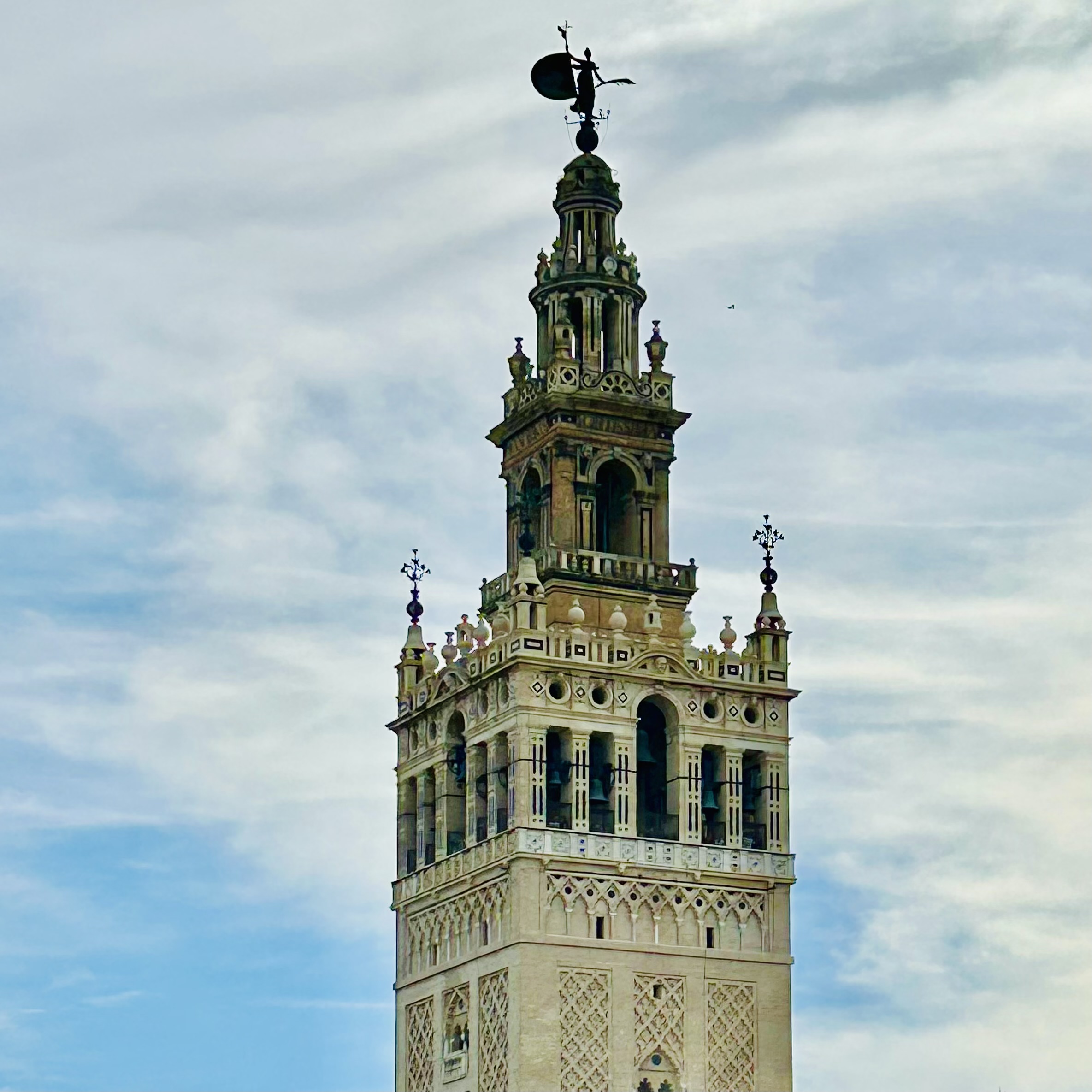
The Cathedral Saint Mary of the See of Seville is listed as a UNESCO World Heritage Site since 1987, and rightly so. The architectural ensemble, which represents one of the largest Catholic cathedrals in the world and the largest in Spain, is astonishing in its architecture and therefore in its history. The Catholic building was built on the site of a pre-existing mosque dating from 1176, of which the minaret – the Giralda, and the Patio de Los Naranjos remain today. In fact, visitors can admire an architectural ensemble that combines Gothic and Almohad styles.
Construction of the cathedral began in 1402 and its consecration took place in 1507.
A prestigious symbol of the prosperity of the Andalusian capital, the Cathedral of Saint Mary of the See aimed to illustrate Catholic domination in a prosperous city, following the Reconquista.
Let’s build a temple so big that those who see it finished will think we’re crazy!”
Alonso Martinez, the architect of the Cathedral of Our Lady of the See
One might think that with the Reconquista, all traces of the golden age of Al-Andalus were erased. This was not the case. The original mosque was not demolished by the Catholic victors but by an earthquake in 1356 that destroyed the mosque – previously converted by the victors into a Catholic church.
When the construction of the cathedral was approved, the builders reused elements and columns from the destroyed mosque and transformed the still-standing minaret – the Giralda – into a bell tower.
The interior of the cathedral is richly decorated. The choir, which occupies the center of the nave, is flanked by two monumental organs and opens onto the main chapel, the Capilla Major, almost crushed by the colossal Gothic altarpiece of forty-five sculpted panels representing scenes from the life of Christ.


The Giralda and the Patio de Los Naranjos, which are the only remaining traces of the old mosque, enclose the cathedral.
The Giralda, which was the former minaret of the Almohad mosque, was built on the model of the minaret of the Koutoubia mosque in Marrakech. Its upper floor and its bell tower, transformed after the Reconquista, were nevertheless built in the Renaissance style and the entire minaret became the campanile, with twenty-four bells, of the Catholic cathedral.
Its name comes from the statue that overlooks the campanile: it turns on its base in the wind, like a weather vane.

The patio, which borders the former prayer room, was spared by the earthquake that destroyed the mosque. It was preserved and integrated into the Catholic building, even if it presents purely Almohad characteristics.


November 8, 2024
